Why Klong Dao Beach Has the Best Hotels on Ko Lanta
When travelers arrive at Ko Lanta by ferry from Krabi, the first beach they encounter after crossing the bridge between Lanta Noi and Lanta Yai is Klong Dao. Three kilometers of pale sand, a gently curved bay, casuarina pines leaning into the sea breeze, and shallow, clear water that makes every morning swim feel like a privilege. The beach is located just ten minutes from Saladan village, the main port and commercial heart of Lanta island. That proximity to infrastructure, combined with natural beauty, explains why the hotel density here is the highest on Ko Lanta and why Klong Dao consistently delivers the strongest base for a Thailand beach stay.
What the area around Klong Dao offers that no travel description fully captures is a sense of appropriate scale. Thai building regulations prevent construction above the tree line or directly on the sand, so every hotel and resort sits behind a canopy of coconut palms and casuarina, invisible from the water's edge. Guests approach the beach through garden paths and arrive at the sand without navigating a lobby the size of an airport terminal. That restraint is wonderful. It is what separates Ko Lanta from the more heavily developed resort islands elsewhere in Thailand, and why this beach consistently earns strong reviews from travelers who have visited both.
The Beach: Geography, Water, and Swimming Conditions
Klong Dao stretches roughly 2.7 kilometers along the northwestern coast of Koh Lanta Yai, its right edge curling into the smaller Kawkwang Beach. The bay is wide and concave, which calms the incoming Andaman swell and produces consistently gentle surf. The seabed has a gradual slope, making it unusually forgiving. Guests can walk a considerable distance before the water reaches chest height, and the absence of rocks underfoot makes the entry smooth for families and those who want to drift without watching every step.
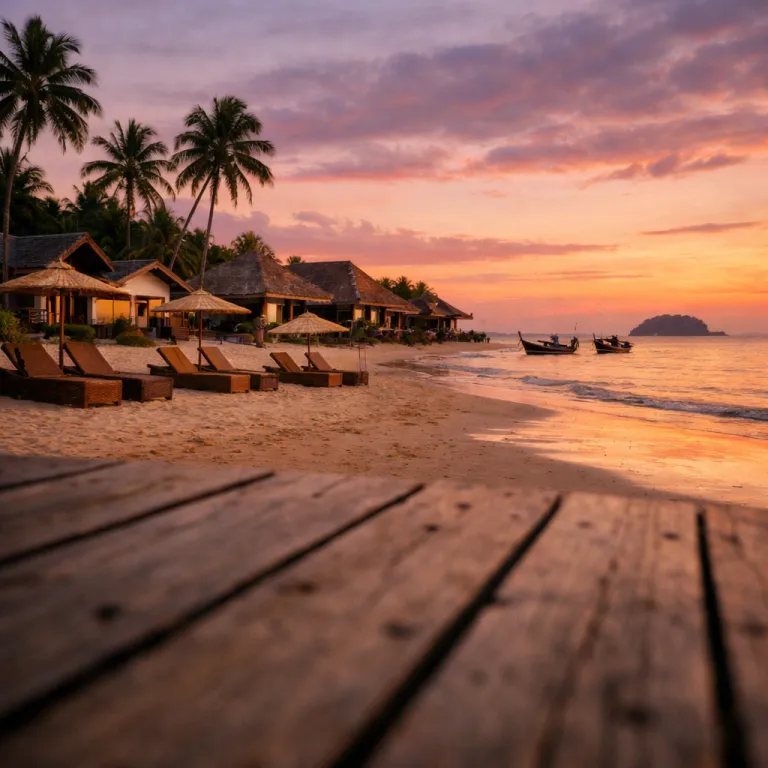
At low tide, the sand flats extend outward, hard-packed and good for morning walks along the shore. At high tide the water laps at the garden walls of the hotels, and the scene becomes more intimate. The beach looks wonderful at both stages. Guests who want a long walk along the waterfront should check a tide app before heading out. The low-tide window consistently delivers the best walking conditions on Klong Dao, and the sunset from this beach, watched during a low-tide evening walk, is among the finest Thailand offers: colors that shift from pink to deep amber over the Andaman as the night comes in, with the silhouettes of the offshore islands appearing one by one against the darkening sky. A night walk along this beach, with the warm water still at ankle depth and no artificial light beyond the distant resort lanterns, reminds guests why they chose Ko Lanta over Phuket.
The water is shallow enough to swim in safety during the dry season. From November to April conditions are ideal: no significant current, warm temperatures, free of the wave action that complicates swimming at Thailand's less sheltered beaches. Klong Dao is popular with families precisely because the gradual entry and calm surface allow even young children to swim with confidence. No motorized watersports are permitted on this beach, keeping the water free of noise and hazard. For guests staying at a Klong Dao resort, stepping from the hotel garden into genuinely swimmable sea is a reliable experience throughout the dry season.
How to Choose a Hotel on Klong Dao Beach
The hotel options on Klong Dao range from small garden-oriented properties featuring a handful of rooms to full resort complexes with multiple pools, spa pavilions, and beachfront restaurants. What connects the best of them is a direct relationship with the beach: a designated stretch of sand, attended sun loungers, and a pool positioned so the horizon appears to dissolve into the sea.
Position within the beach matters considerably. The northern section, nearest Saladan, holds the most established resort properties. Each of these properties offers multiple dining options, spa treatments, fitness facilities, and kids' clubs. The walk from a northern hotel to Saladan takes under fifteen minutes and puts restaurants, tour operators, and motorbike rental within easy reach. A guest looking to explore the island by day and return to a full-service resort in the evening will find the northern end of Klong Dao the most convenient location on the Ko Lanta map.
The southern section of Klong Dao is quieter and more garden-focused. Wonderful for couples who want proximity to the beach without the activity of its most popular section. The properties located in this southern stretch tend to earn guest ratings as high as the larger northern resorts, for different reasons: a more personal atmosphere, better garden aesthetics, and a sense of quiet that a fifty-room resort cannot easily replicate.
In terms of room categories, the better hotels offer garden-view rooms and bungalows, sea-facing superior rooms, and larger suites featuring private terraces and outdoor showers. The step up from garden-view to sea-view rooms is meaningful at Klong Dao. A guest spending three or more nights will find that sea-facing rooms justify the extra price per night, particularly in the late afternoon when the light turns the water gold. Guests who check in with a garden room and return a second time almost always upgrade. The sea-facing rooms are the ones that generate the most appreciative guest reviews.
SHA-certified properties are popular on Klong Dao for guests who prioritize verified health and hygiene standards. The SHA certification from the Thai government is featured on a growing number of Klong Dao listings, and checking for SHA status has become part of many travelers' initial review when planning a Ko Lanta stay. The SHA plus certification covers cleanliness, food handling, and guest safety, and its presence on a property profile is a useful signal of management quality. Guests who check specifically for SHA status when browsing Thailand hotels often find that SHA-certified Klong Dao properties also tend to score higher in overall guest satisfaction, as the discipline required to maintain SHA standards typically correlates with attentive service in other areas of the hotel operation.
Comparing Hotels: Star Ratings, Guest Reviews, and What They Mean
The star rating system on Ko Lanta tells a partial story at best. A well-run four-star hotel situated directly on Klong Dao Beach with good breakfast, a warm pool, and a reception team that knows the island will consistently outperform a five-star property where service is indifferent and the beach access requires a walk through a parking structure. Guest reviews filtered for recency tend to capture this more accurately than the star rating alone. A property with a guest satisfaction rating above 8.5 and located within thirty seconds' walk of the sand is, in practice, a better choice than a higher-starred property situated on a road behind two other resorts.
Reading guest reviews for Klong Dao hotels reveals a consistent set of priorities: the quality of direct beach access, the noise level at night, the consistency of pool maintenance, and the attentiveness of breakfast service. Negative reviews on Ko Lanta properties rarely cite the location itself: the beach, Klong Dao's calm water, and the sunset are consistently praised in reviews across every property category. The complaints tend to focus on room-level issues: air conditioning reliability, shower pressure, wifi strength in rooms situated furthest from the router. A useful screening approach is to check reviews specifically mentioning the beach access and the night-time noise levels, which vary considerably between properties on Klong Dao. A property with several recent reviews noting quiet nights and easy beach access is a good sign that the rating reflects the actual experience rather than a previous era of management.
For guests comparing hotels on price per night, the range at Klong Dao is considerable. The most affordable options are garden bungalows at small independently run properties featuring basic amenities but genuine cleanliness and good beach proximity. The mid-range price point, covering three-star and solid four-star properties located within the northern beach zone, typically offers the best value ratio at Klong Dao: good pool facilities, reliable restaurant options, free parking, and direct beach access at a price per night that represents a significant saving over the established luxury resorts without meaningfully compromising the experience. For guests who check the night price across the full Klong Dao range before booking, the most useful comparison is between properties at a similar price per night with different configurations of beachfront access and pool quality. A slightly lower price per night at a beachfront moo setting with a smaller outdoor pool often outperforms a higher price at a property with a larger pool situated away from the water. The most expensive options are suites at the established beachfront resorts, typically featuring private pools, butler service, and high-end spa packages. The price per night at this level reflects genuine quality, and the guest ratings for these properties consistently rank among the highest in the Krabi province hotel market.
Spa, Pool, and Outdoor Features
Spa culture is central to the Ko Lanta hotel experience, and Klong Dao resorts take it seriously. Traditional Thai massage is available at every hotel, but the resort spas here go further: herbal compress treatments, Thai botanical facials, outdoor couples' rituals in open-air pavilions, and the kind of long, unhurried treatments that produce a complete physical reset. The best spa facilities on Klong Dao are worth booking in advance on arrival, as availability for premium treatment slots fills early during peak season, particularly in December and January when the beach is at its busiest.
Pool design at the better hotels has evolved. The most compelling configurations feature infinity edges oriented toward the sea, with a swim-up bar and shallow wading sections. Some resorts have separated the adults' pool from the children's area, a detail that meaningfully improves the experience for travelers without children. The pool complex at a Klong Dao resort is typically the social center of the day: morning laps, midday relaxation, evening cocktails as the sun drops behind the western islands. Several properties have also invested in fitness pavilions overlooking the sea, a good sign that their visitor profile extends beyond passive beach lounging.
Most hotels feature their own restaurant with sea views and terrace seating. Some offer an extra dining arrangement directly on the sand for private dinners, a popular choice for couples celebrating a special occasion. The wine list at the better resort restaurants has improved to reflect a clientele that expects quality at the table.
Free WiFi is standard at all hotels. Free parking is available at most properties, good for those who rent a motorbike for island exploration. Room features across the better properties include air conditioning, safe deposit boxes, and quality terrace furniture. Several beachfront hotels offer free use of kayaks and paddleboards as part of the standard room package, making the water immediately accessible without an equipment rental transaction.
Getting Around: Saladan, the Map, and What's Within a Minute or a Mile
The map of Koh Lanta Yai shows a narrow island roughly 30 kilometers long. Klong Dao is situated at the northwestern corner, minutes from Saladan and the pier where boats from Krabi dock. Guests at Klong Dao hotels reach the pier in a five-minute drive or a fifteen-minute walk and board boats to Koh Rok, Koh Haa, or Koh Jum without a long transfer. That position on the map is a meaningful advantage over the remote southern beaches, where reaching the pier from the hotel means an hour by road. For guests arriving from Krabi by ferry, Klong Dao is the most immediately accessible base on Ko Lanta, located at the northern end of the island where ferry services from the Krabi mainland dock first.
Saladan is good value for dining and practical needs. The morning market operates early, the seafood restaurants along the main street are genuinely local in character, and the tour operators near the pier offer everything from multi-day liveaboard diving to half-day cooking classes. Walking to Saladan from a Klong Dao hotel in the evening, checking the Muay Thai stadium schedule at the pier noticeboard, and finding a good local restaurant for dinner is a reliable evening pattern on Ko Lanta that gives a sense of the island beyond the resort. A minute's walk from most hotels in the northern section puts guests on the beach road with the full range of dining options laid out ahead of them.
Motorbike rental from Saladan is straightforward and good value in Thailand. The road south from Klong Dao runs along the western coast, passing through moo villages, past Long Beach, Kantiang Bay, and eventually reaching the Mu Ko Lanta National Park headquarters. Each stretch of road offers something different. The east coast road passes through mangroves, rubber plantations, the traditional Chao Leh sea nomad house village at the southern tip of the island, and a series of roadside stalls selling house-made coconut oil and fresh fruit. Parking is available at every beach stop along the route. A day of riding this road, stopping at local restaurants in the moo village clusters and swimming at quieter coves, is among the best things available to a guest staying at Klong Dao. The moo village road sections of Ko Lanta's interior are genuinely wonderful: quiet lanes lined with rubber trees, wooden houses on stilts, and a pace of life entirely removed from the beach resort strip.
Muay Thai, Local Culture, and Land Activities
Ko Lanta has a Muay Thai stadium situated on the main road through the center of the island. Evenings at the Muay Thai stadium are a popular activity for guests staying at Klong Dao hotels, offering a genuine insight into the sport in a local setting. The atmosphere at a Ko Lanta Muay Thai card, with fighters from the surrounding moo villages and a crowd composed partly of Thai families, is notably different from the staged Muay Thai events marketed to resort guests at Phuket or Koh Samui. Several Klong Dao hotels arrange transport and book tickets for Muay Thai evenings, and reception desks typically maintain a current schedule of upcoming cards at the stadium. The Muay Thai stadium is situated about ten minutes by motorbike from Klong Dao Beach, a short ride that also passes through several moo village road sections featuring local shops and roadside food stalls.
Cooking classes offered near Klong Dao start with a market visit to Saladan for ingredients and move to a garden kitchen for hands-on instruction. Southern Thai food differs significantly from the central Thai cooking most guests know: the use of dried spices with Indian influence, the intensity of fresh turmeric, the way coconut milk balances chili heat. It is a good way to spend an afternoon, and the meal at the end of the class is consistently among the best things a guest eats during a Ko Lanta stay.
Khao Mai Kaew Cave is situated in the island's jungle interior and requires a guide and a headlamp. It takes about two hours to explore properly, featuring stalactite formations and narrow passages. The cave is typically arranged as a half-day tour departing from Saladan in the morning. It is the kind of activity that gives a Ko Lanta stay more texture than a week spent entirely at the beach and pool.
Day Trips: Koh Rok, Koh Haa, Koh Jum
The waters around Ko Lanta belong to the Mu Ko Lanta National Park, and the snorkeling and diving available on day trips from Klong Dao is among the finest in Thailand. Koh Rok, a pair of uninhabited islands roughly two hours south by speedboat, delivers consistent visibility and excellent reef quality. The fish life is abundant: parrotfish, angelfish, blacktip reef sharks, and turtles. Day trips depart early morning and typically include free snorkeling equipment. Guest reviews consistently describe the Koh Rok day trip as the single best excursion available from a Ko Lanta hotel on Klong Dao Beach.
Koh Haa, a cluster of five karst islands with underwater caverns and extensive coral gardens, is the more demanding option. The marine life is extraordinarily varied, and the limestone formations create a landscape that feels architectural underwater. Both Koh Rok and Koh Haa are easily arranged through Saladan tour operators, and most Klong Dao resort hotels feature an excursion desk where guests can check availability and book day trips on arrival.
Koh Jum, the quieter island north of Ko Lanta, makes a different kind of day trip. There is almost no tourist infrastructure: wooden fishing house structures, undeveloped beaches, and a pace of life that makes Ko Lanta itself look busy. It is reachable by longtail boat from Saladan in about an hour. Checking the weather and booking the Koh Jum trip through the hotel is advisable, as longtail availability on the day depends on sea conditions. The island features no parking facilities or organized tour infrastructure, which is entirely the point of going there.
Mangrove kayaking on Ko Lanta's east coast is the most underrated activity available from Klong Dao hotels. Half-day guided tours navigate through the root systems at high tide, passing monitor lizards and birds in the canopy. The experience of paddling through filtered green light, in silence, with nothing motorized in sight, tends to linger in memory longer than the resort pool.
Practical Information for Guests
Klong Dao has good infrastructure within walking distance of most hotels. Convenience stores handle daily supplies. A small clinic is situated near the northern end of the beach, a practical reassurance for families. Multiple walk-in massage parlors offer Thai massage at rates well below the resort spa price. Good morning routines on Klong Dao tend to involve an early swim, breakfast at the hotel, a walk along the beach at low tide, and a midmorning treatment at one of the beach-road massage houses. Parking is free at most hotels and the road access from Saladan is straightforward.
Checking availability early for the peak months of December and January is advisable, as the better hotels fill significantly during this period. February, March, and November offer the same weather quality with easier availability and a lower price per night. For budget-conscious travelers, the shoulder months represent a good moment to book: availability is better, the price per night is lower, and the beach is less crowded. April is viable but brings rising humidity. From May onward the monsoon arrives with real force, most resort hotels close for the season, and beach swimming becomes inadvisable. The dry-season window is wide enough that most travelers can plan around it without difficulty. Checking availability in the February-March window specifically often surfaces a good combination of value and weather.
No touts operate on Klong Dao Beach. The beach is free and open. There are no assigned paid zones or chair territories beyond the hotels' own sections. Guest reviews consistently mention this as a distinguishing feature of Klong Dao compared to Thailand's more heavily commercialized beach destinations. The absence of pressure is itself a form of luxury, and it is one that Klong Dao delivers reliably, year after year, to guests who choose it over the more famous shores of the Andaman coast. The guest experience here is shaped by the beach itself: wide, calm, free of commercial noise, and situated at just the right distance from Krabi to feel properly removed from the mainland without being inaccessible.
Frequently Asked Questions
What should guests check before booking a hotel on Klong Dao Beach?
The most important features worth checking before booking: direct beachfront access versus a property situated a row back, pool configuration for adults-only sections, check-in and check-out times relative to ferry arrival from Krabi, SHA certification status if hygiene standards are a priority, and free parking availability for those planning motorbike rental. For stays in December and January, checking availability early and reading recent guest reviews focused on beach access and service consistency is advisable. Many good properties offer free cancellation on advance bookings, which is worth checking for the peace of mind it provides. For stays of more than four nights, the better resort hotels typically offer extra amenities or complimentary room upgrades in shoulder season. The price per night at Klong Dao spans a wide range, and aligning the features that matter most with the price point available is the most useful approach to choosing among the hotel options on the beach. A guest who takes an extra thirty minutes to check the combination of SHA certification, recent reviews, direct beach access, and check-in flexibility before booking will typically arrive at a property that exceeds rather than merely meets expectations. Thailand as a destination rewards this kind of careful selection, and Klong Dao's range of hotel options means that extra care in the booking process almost always produces a noticeably better stay.
How does Klong Dao compare to other Ko Lanta beaches for hotel quality?
Klong Dao has the most complete hotel infrastructure on Ko Lanta, featuring the widest range of property types from garden bungalows to beachfront resort suites, and the most consistent service standards. Long Beach to the south is popular and lively but features more budget-oriented accommodation. Kantiang Bay near the national park is wonderfully situated but has limited hotel options and accessing Saladan from there takes considerably longer. Guest reviews from travelers who have stayed on multiple Ko Lanta beaches consistently indicate that Klong Dao delivers the most reliable combination of beach quality, resort amenities, dining variety, and proximity to day-trip departures from the Saladan pier. For a first visit to Lanta island, it is the most practical and the most consistently rewarding choice.
What activities can guests arrange from Klong Dao Beach hotels?
Most Klong Dao resort hotels can arrange day trips to Koh Rok and Koh Haa for snorkeling and diving, Muay Thai stadium evenings, mangrove kayak tours, cooking classes, cave exploration, and longtail boat trips to Koh Jum. Free snorkeling equipment is typically included in day-trip packages. Guest reviews frequently mention that booking through the hotel is smoother than arranging independently, particularly in peak season when availability at popular tour operators fills quickly. For independent arrangement, a fifteen-minute walk to Saladan puts guests in front of every tour operator on the island. The Muay Thai stadium schedule, cooking class availability, and day-trip departures for Koh Rok and Koh Jum are all available at hotel reception. Checking availability one day ahead is advisable for peak-season bookings. A guest who checks in at a Klong Dao resort and spends an extra few minutes with the reception team to map out the week's activities, checking availability for the Koh Haa snorkel trip and the Muay Thai night simultaneously, typically leaves the island with a more complete experience of what Ko Lanta actually offers beyond the beach and pool. The combination of good weather, accessible moo village roads, excellent snorkel sites, and a genuinely welcoming night-time atmosphere in Saladan makes Klong Dao one of the most worthwhile bases in southern Thailand.