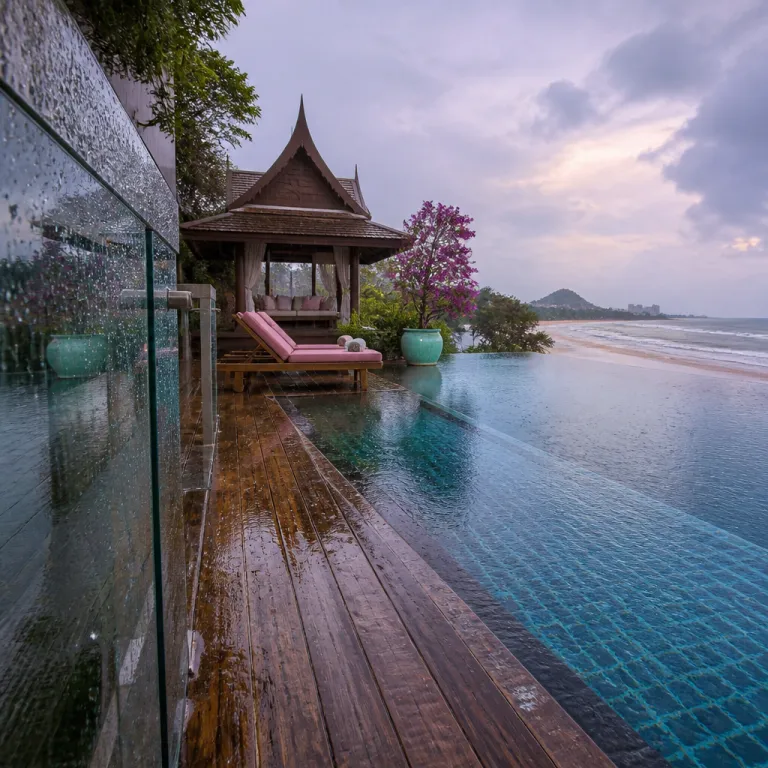
Why Hua Hin’s rainy season is a luxury insider’s window
On the map of southeast Asia, Hua Hin sits quietly on the Gulf of Thailand, facing calmer seas and softer clouds than its Andaman rivals. That single geographic fact reshapes the entire rainy season narrative for any high end Hua Hin beachfront resort, because the Gulf of Thailand coastline typically sees short showers rather than the all day deluges that drench Phuket or Krabi. For business travelers turning a Bangkok trip into a weekend stay, this beach town offers a rare mix of royal heritage, manageable weather and serious value.
Rain here usually arrives as a 30 to 60 minute burst in the late afternoon, so your day still starts with clear skies over Hua Hin Beach and ends with a dry stroll past the railway station and night market. According to long term summaries from the Thai Meteorological Department, Hua Hin averages roughly 80 to 120 millimetres of rain per month between June and September, while Phuket often records more than double that in the same period, with some months exceeding 250 millimetres. In practical terms, the so called rainy season feels more like a green, cooler shoulder period. That is why the official answer to the question “Is Hua Hin suitable for travel during the rainy season?” is simply “Yes, Hua Hin experiences less rainfall than other regions, making it suitable for travel.”
For luxury hotels and villas, this June to October window is when the best time to secure upgrades quietly opens. Publicly available rate snapshots and seasonal offers show that Centara Grand Beach Resort, InterContinental Hua Hin and wellness icon Chiva Som often publish rainy season promotions that sit noticeably below their peak season tariffs, turning aspirational suites with a private pool into realistic weekend options for discerning guests. One Bangkok based executive described timing a quarterly meeting around this pattern: “We finished our Friday board session, drove straight down, and by sunset I was in an oceanfront suite that would be double the price in March.” If you plan your visit carefully, you can align corporate meetings in Bangkok with a Friday departure and a two and a half hour drive straight to your chosen resort, avoiding airports entirely.
Weather patterns, rate drops and the case for June to September
Think of Hua Hin’s rainy season as a soft filter rather than a storm, with clouds that roll in late and leave early while the beaches stay surprisingly usable. From June through September, mornings along Hua Hin Beach are often bright enough for water sports, while the brief showers later in the day cool the sand and empty the pool decks at every upscale coastal hotel. Compared with Phuket, which can see around 300 millimetres of rain in June alone according to regional climate reports, Hua Hin typically records a fraction of that, so your stay is rarely written off by weather.
This pattern creates a sweet spot for rates, especially between late June and early October when demand dips but service levels remain high. Chiva Som’s wellness packages, usually reserved for longer stays, become more accessible for a three night weekend, and InterContinental’s ocean facing villas often include club access or spa treatments in their rainy season offers. Centara Grand Beach Resort may bundle daily breakfast, late checkout and resort credit into midweek stays, while smaller Thai owned properties add airport transfer or afternoon tea to tempt guests who are comparing options. Many properties quietly structure their events calendars around this period, adding wine dinners, Thai cooking classes and local art workshops to keep guests engaged if a shower lingers over the Monsoon Valley vineyard inland.
For travelers comparing coasts, this is where the Gulf of Thailand side wins on both comfort and cost. If you crave a design focused alternative for another trip, you can benchmark Hua Hin’s value against the quieter shorelines of Surin by reading about a Sino Portuguese style property with butler service in a detailed Surin Beach review or similar resort analysis. Use that as a reference point, then look at what Hua Hin offers in green season, and you will see why many frequent flyers now treat this royal beach town as their default rainy season base in Thailand.
Royal heritage, railways and the character of the beach town
Long before international guests arrived, Hua Hin was the seaside escape of Thai royalty, and that legacy still shapes the town’s understated rhythm. The historic railway station, with its traditional Thai architecture and crimson pavilion, remains a symbol of that era and a practical gateway for those who prefer to arrive by train rather than car. When you step off the platform, the scale of the beach town feels human, with low rise streets leading gently towards the beaches and the older resorts that first defined the area.
That royal heritage translates into a certain restraint in the way luxury is expressed at each rainy season beach resort. You feel it in the manicured gardens of Centara Grand Beach Resort, where the lawns roll down to the beach in a way that recalls European seaside villas, and in the discreet service at smaller Thai owned properties that still reference traditional Thai design. Even when the rainy season clouds gather, the atmosphere remains more Klai Kangwon Palace than party strip, which suits business leisure travelers who want a quiet stay with polished service.
To understand this character in more depth, it is worth reading a dedicated analysis of why Hua Hin deserves a second look from luxury travelers in a royal beach town feature or long form destination guide. That kind of piece unpacks how local golf courses, art villages and long running night market events give the town year round appeal beyond the beach itself. When you combine that cultural layer with the softer monsoon pattern on the Gulf of Thailand side, the result is a destination where a rainy day still feels purposeful rather than wasted.
How to choose and use a rainy season luxury stay
Booking a high end Hua Hin hotel during the monsoon months is less about bracing for storms and more about planning your rhythm around short showers. Start by deciding whether you want a classic beachfront resort with a central pool or a more secluded villa with a private pool and garden, then match that choice to how you like to spend each day. If you are extending a work trip, a resort close to the railway station or main road will make your Friday arrival and Sunday departure smoother.
For couples or solo travelers focused on wellness, the rainy season is the best time to secure longer spa treatments and wellness consultations without waitlists. Many resorts in Thailand now bundle massages, facials and hydrotherapy into green season packages, and Hua Hin is no exception, with properties designing rainy season offers that encourage guests to linger indoors during passing showers. Families, on the other hand, may prefer villas with larger pools and shaded terraces, so children can swim between showers while adults enjoy Thai coffee or a glass of wine from a local vineyard label produced in the hills outside town.
Whatever your profile, treat the rainy months as an opportunity to engage more deeply with local life rather than a compromise. Plan a visit to the morning markets when the air is cooler, schedule water sports for late morning when the sea is calm, and reserve spa treatments for mid afternoon when showers are most likely. For a broader perspective on what truly defines a top tier resort in Thailand, including how properties should perform in low season, read an expert guide to genuine luxury stays or a curated list of recommended Hua Hin resorts before you confirm your booking.
FAQ
Is Hua Hin suitable for travel during the rainy season ?
Yes, Hua Hin is suitable for travel during the rainy season because it sits on the Gulf of Thailand, which receives less intense monsoon rain than the Andaman coast. Showers are usually short and often arrive in the late afternoon, leaving mornings and evenings clear for the beach and pool. This pattern allows guests to enjoy a full luxury stay with only minor adjustments to their daily schedule.
Are luxury resorts in Hua Hin cheaper during the rainy season ?
Luxury resorts in Hua Hin generally offer lower rates during the rainy season, especially from June to October when demand softens. Many properties introduce value driven packages that include spa treatments, dining credits or late check out to attract guests. This makes it an excellent time for travelers to experience higher room categories or villas that might be out of reach in peak months like March and April.
What activities can I enjoy in Hua Hin when it rains ?
When a shower passes through, guests can shift from the beach to indoor experiences without sacrificing quality. Spa treatments, Thai cooking classes, wine tastings featuring labels from nearby vineyard estates in the hills and visits to art villages all work well in wet weather. Once the rain clears, you can return to the pool, walk along Hua Hin Beach or explore the night market in the cooler air.
When is the best time to visit Hua Hin for a luxury weekend ?
The best time for a value focused luxury weekend is during the green season from June to October, when rates drop but the weather remains manageable. If you prefer almost guaranteed dry days, the period from November to February is traditionally the most stable, though prices are higher. Many repeat visitors now choose the rainy months as their preferred time to travel, balancing comfort, cost and crowd levels.
How does Hua Hin compare with Phuket in monsoon season ?
Hua Hin typically receives far less rainfall than Phuket during the monsoon months, which means fewer fully washed out days. While Phuket can experience heavy, prolonged downpours, Hua Hin usually sees shorter showers that still allow for beach walks, pool time and outdoor dining. For travelers prioritizing reliability and ease of access from Bangkok, this makes Hua Hin a smarter rainy season choice.
Sources
Thai Meteorological Department monthly climate statistics for Prachuap Khiri Khan and Phuket ; Tourism Authority of Thailand regional destination profiles ; Prachuap Khiri Khan Provincial Office of Tourism visitor reports