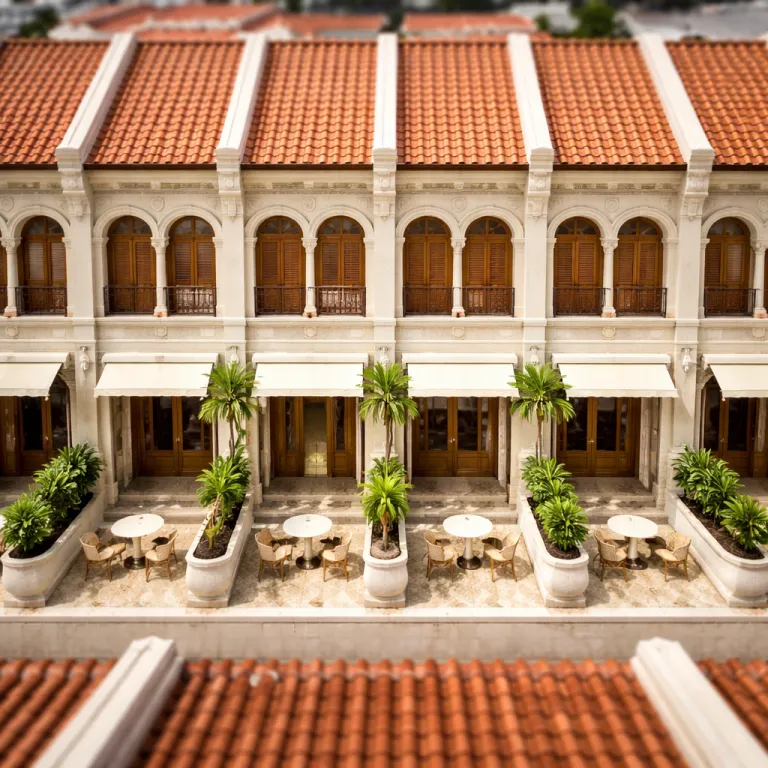
Why Sino-Portuguese townhouses matter for luxury travelers
Phuket is usually shorthand for a beach escape, yet its historic town tells a richer story. For travelers comparing Phuket boutique heritage hotels with larger resort villas on the island, the old streets offer something the beachfront rarely can: a direct line into the island’s trading past. In Phuket Town you walk between pastel facades and arcaded five-foot ways, then return to a quiet room where original timber shutters frame the evening light.
Sino-Portuguese architecture in Phuket, Thailand blends Chinese courtyard logic with European ornament, and that mix now anchors some of the best small historic hotels the island can offer. Early last century, Chinese migrants built narrow townhouses with internal air wells for ventilation, and these same structures now host carefully restored rooms, compact pools and discreet restaurant bars. The architectural transformation from family home to intimate hotel was deliberate, as “Sino-Portuguese townhouses converted into boutique hotels” and “To preserve heritage and attract tourists” explain the dual purpose behind today’s hospitality scene.
Staying in these converted townhouses is not about a private beachfront or a sprawling resort swimming pool, but about context and character. You trade instant access to Patong Beach or Bang Tao for the ability to step out onto Thalang Road at sunrise, when the town is still quiet and the shrines are smoky. For many solo travelers, that tradeoff makes a heritage stay in Phuket Town the most rewarding boutique choice for a first or second visit to the island.
Understanding Phuket Old Town’s heritage grid
Phuket Town grew rich on tin, and the streets still show it in plaster moldings, teak doors and tiled corridors. The densest concentration of Sino-Portuguese buildings sits around Thalang Road, Dibuk Road and Krabi Road, where more than one hundred and fifty shophouses form a conservation district that now hosts cafés, galleries and characterful hotels. According to the Phuket City Municipality’s Old Town conservation plan (referenced in local planning documents and tourism board summaries), this core area preserves one of the largest continuous rows of Sino-Portuguese facades on the island, and booking a boutique address here effectively reserves a front-row seat on this streetscape.
By day, Phuket Town feels almost Mediterranean in its rhythm, with shady five-foot ways and internal courtyards that keep rooms surprisingly cool without constant air conditioning. Many of the most atmospheric places to stay created from these townhouses use traditional materials but add modern comforts such as a compact outdoor swimming pool, a small fitness centre or a quiet reading room. The Memory at On On, first opened in 1929 as a simple inn for tin traders and later restored by local owners in the early 2010s, shows how a once utilitarian stopover can become a refined heritage hotel without losing its patina; a manager there once described the renovation as “polishing the story, not erasing it.”
Night brings a different mood, especially on the Sunday walking street market along Thalang Road, where food stalls, live music and lanterns turn the town into a soft-focus stage. This is when staying in a central heritage hotel pays off, because you can wander the market, eat at Raya or the Lock Tien hawker court, then walk five to ten minutes back to your room instead of driving in from a distant beach resort. Travelers who enjoy refined evenings on other islands often compare this atmosphere with the more polished nightlife at Koh Samui, and you can read about those refined evenings in detail in our guide to nightlife on Thailand’s most vibrant island.
Where to stay: four characterful heritage addresses
Choosing between Phuket boutique heritage hotels in the old town is less about star ratings and more about personality. The Memory at On On offers history starting from the lobby, with original floor tiles, high ceilings and simple but atmospheric rooms that suit travelers who prioritize story over amenities. Casa Blanca, by contrast, feels lighter and more contemporary, with a small outdoor swimming pool tucked behind its façade and rooms that lean into white walls and patterned tiles.
Hotel Verdigris is one of the most interesting hotels Phuket has added to the heritage mix, because it layers moody interiors and curated art onto a Sino-Portuguese shell. Rooms here feel more like city suites than traditional resort villas, and the small rooftop pool gives you a rare elevated view over Phuket Town and the surrounding hills. For guests who want a little more polish, some boutique heritage properties now include a compact fitness centre and thoughtful restaurant bars, though you should not expect the full spa circuit you might find at a larger island resort; typical nightly rates for these town properties often sit in the mid-range bracket rather than ultra-luxury.
Many travelers pair two or three nights in Phuket Town with a longer stay on the coast, using the heritage stay as a cultural prologue. One smart combination is to start in the old town, then move to a quieter Andaman shore such as Surin, where properties like Navera Phuket reinterpret Sino-Portuguese motifs at a beachfront scale, as we explore in our review of Sino-Portuguese design with butler service on a quieter shore. If you are planning a wider regional journey that links Phuket boutique heritage hotels with other island retreats, our overview of elevated resort destinations in Southeast Asia can help you map the full route.
Balancing townhouses with beaches, pools and islands
Every stay in Phuket eventually comes back to the beach, so the question is not whether you will see the sea but how you will structure the trip. A common pattern is to begin in Phuket Town, where you can settle into one of the boutique heritage hotels, adjust to the climate and explore the markets before heading to the coast. From this base, you are within a thirty-minute drive of Patong Beach, Bang Tao, Nai Harn or even the long sands of Mai Khao, which makes day trips easy if you want a first swim without changing hotels.
Travelers who crave a full resort experience often move from the townhouses to a beachfront property with a larger swimming pool, more extensive resort villas and direct sand access. Patong suits those who want energy and nightlife, while Bang Tao and Nai Harn appeal to guests who prefer quieter bays and more space between loungers. Mai Khao, near the airport, offers some of the best boutique-style low-rise hotels on the island, with long beachfront stretches that feel surprisingly wild compared with the town streets.
Island hopping adds another layer, especially if you extend your journey from Phuket, Thailand to nearby islands such as Yao Noi, which offers low-key resort villas and a slower rhythm. Many travelers now book a sequence that runs from a heritage townhouse in the old town to a beachfront pool suite on the west coast, then onward to a final few nights on Yao Noi for a softer landing. This pattern gives you architecture, city life, swimming and island quiet in one coherent arc, without excessive transfers or rushed packing.
What these heritage hotels offer — and what they do not
Staying in Phuket boutique heritage hotels means accepting the constraints of early twentieth-century townhouses, and that honesty is part of their appeal. Rooms are often narrower than in a modern resort, ceilings can be high but windows small, and the swimming pool, if there is one, tends to be a compact courtyard pool rather than a sweeping lagoon. You gain atmosphere, walkability and a sense of place, but you lose some of the expansive outdoor space that defines many beachfront properties.
Service in these hotels is usually personal and attentive, with staff who know the town intimately and can point you to the best khao soi stall or the quietest shrine. Facilities, however, are intentionally limited, so you should not expect a full-scale spa, multiple restaurant bars or a large fitness centre with rows of machines. Many guests use the town itself as their amenity deck, swimming at nearby beaches by day and returning to the hotel for a nightcap in the courtyard.
These properties suit solo explorers, design-focused couples and repeat visitors who have already stayed in a larger resort and now want a different angle on Phuket, Thailand. If your priority is an all-day kids’ club, extensive water slides and direct beachfront access, a dedicated resort on Patong Beach, Bang Tao or Mai Khao will serve you better than a townhouse in Phuket Town. For everyone else, the combination of history, scale and location the old quarter offers makes these heritage addresses some of the most compelling boutique options in the country.
FAQ
What is Sino-Portuguese architecture in Phuket Town ?
Sino-Portuguese architecture in Phuket Town is a blend of Chinese and European styles expressed through narrow shophouses with pastel facades, arcaded walkways and internal air wells. These buildings were originally constructed by Chinese migrants during the tin trade boom and later adapted into hotels, cafés and shops. Staying in Phuket boutique heritage hotels places you directly inside this architectural story rather than just viewing it from the street.
Where can I find heritage style hotels in Phuket ?
The highest concentration of heritage-style hotels in Phuket sits in and around Thalang Road, Dibuk Road and Krabi Road in Phuket Town. Many of the most characterful properties occupy restored townhouses, offering compact rooms, small pools and easy access to local restaurants and markets. When you search major booking platforms such as Expedia, filter for Phuket Town and heritage or Sino-Portuguese style to narrow the options.
Why were the townhouses converted into hotels ?
The conversion of townhouses into hotels in Phuket Town was driven by a desire to preserve historic architecture while supporting the local economy. Owners worked with artisans and heritage groups to restore facades, repair timber and add modern amenities such as air conditioning and private bathrooms. This approach allows travelers to enjoy Phuket boutique heritage hotels while helping fund ongoing conservation.
Are heritage hotels suitable for families who want a beach holiday ?
Heritage hotels in Phuket Town can work for culture-focused families, but they are not ideal if children expect a large swimming pool, direct beach access and extensive resort facilities. Most properties offer smaller pools, limited outdoor space and no kids’ clubs, so you may prefer to combine a short town stay with a longer beachfront resort. Families often spend two nights in Phuket boutique heritage hotels, then move to a coastal property at Patong, Bang Tao, Nai Harn or Mai Khao for the rest of the trip.
How many Sino-Portuguese buildings remain in Phuket Old Town ?
Phuket Old Town retains around one hundred and fifty Sino-Portuguese buildings within its conservation area, according to figures cited by the Phuket City Municipality and local heritage organizations. Not all of these are hotels, but a growing number have been sensitively adapted into guesthouses, cafés and galleries. When you stay in Phuket boutique heritage hotels, you are contributing to the economic model that helps keep these structures maintained and in active use.