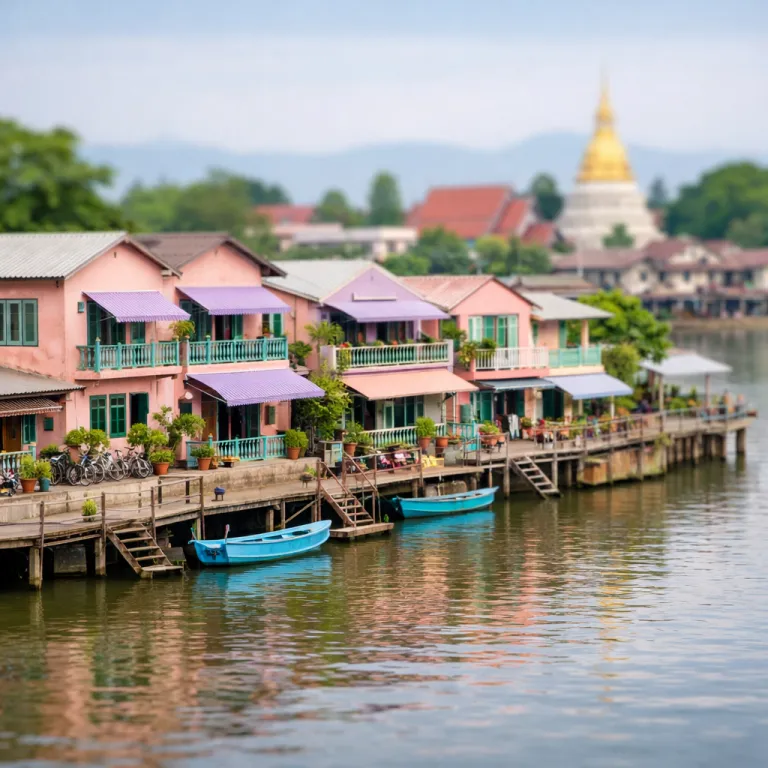
Hotel Chiang Mai Wat Ket: A Riverside Quarter Worth Staying In
Few addresses in Chiang Mai carry the particular weight of Wat Ket. Located on the eastern bank of the Mae Ping River, this historic quarter sits apart from the Old City moat, apart from the tourist corridors, and apart from the version of the city that most visitors only ever see. Choosing a hotel here is a deliberate editorial choice. It signals that you came for Thailand, not just for a photograph of it.
Wat Ket is named after the ancient temple at its heart, Wat Ket Karam, which dates to the fifteenth century. The neighborhood grew around the river trade that once defined northern Thailand's economy, drawing Chinese merchants, Burmese craftsmen, Shan traders, and eventually European missionaries and colonial administrators. That layered past is still legible in the architecture: teak houses with carved eaves, colonial-era facades softened by tropical vegetation, family compounds quietly converted into coffee shops and art galleries. The Ping River remains the spine of the entire district. For hotels positioned along Charoenrat Road, the water is never far from any room.
Why Stay in Tambon Wat Ket Rather Than Anywhere Else in Chiang Mai
The comparison with the Old City walled district is inevitable but instructive. The Old City concentrates temples and tourist infrastructure inside its moat. Wat Ket opens outward toward the river and the neighborhoods that grew organically around commerce and daily life. The pace is different. Mornings here feel genuinely local: monks collecting alms along quiet lanes, market vendors setting up before the heat arrives, the sound of water birds on the Ping before the riverside restaurants open.
This is Tambon Wat Ket, in the Muang Chiang Mai district, and its administrative identity reflects its character. It is not a curated tourist zone. It is a real place, a phum of genuine city life, that happens to offer some of the most popular hotel options in northern Thailand, many of them with direct river views. Guest experiences in this quarter are consistently shaped by the river: the quality of light in the morning, the temperature drop at dusk, the visual anchoring that moving water provides in any landscape. The phum sits at the junction of river life and city life, which is precisely what makes it so consistently wonderful to stay in.
For travelers planning a vacation in chiangmai, the Wat Ket area provides a base that more popular hotel corridors simply cannot match. The Night Bazaar is roughly five hundred meters west across the Narawat Bridge. Thapae Gate, which marks the eastern entrance to the Old City, is reachable within fifteen minutes on foot or by tuk-tuk. Chang Klan Road, the city's entertainment spine, runs parallel to the river just across the bridge. Muang Chiang Mai's most important cultural sites are all within easy reach, making the Tambon's geographic position one of its most underrated advantages.
What Hotels in Wat Ket Actually Offer
Properties in this quarter fall into two broad categories. The first is the large riverside resort, typically occupying a significant stretch of the Ping riverfront, with full amenities: pool, spa, multiple dining venues, and generous room sizes with views oriented toward the water. These properties are built for guests who want Chiang Mai's atmosphere without friction, with the river as a constant backdrop. The second category is the smaller, more intimate independent hotel, often housed in a converted teak compound or a restored colonial house, where the architecture itself is part of the offer.
There are also guest houses and hostels in the Wat Ket area serving travelers on more flexible budgets. Even the more affordable hostels here have absorbed something of the quarter's aesthetic: the teak floors, the river proximity, the morning calm that makes a simple breakfast on a shaded terrace a genuinely wonderful start to any day. Bicycle rentals are typically offered through or near these properties, and the flat terrain makes cycling the most popular way to explore the quarter. Parking is available at the larger properties; smaller guest houses and hostels often rely on street parking nearby, which is generally available outside peak hours. Car rentals and scooter rentals are available in the Muang district, with agencies operating near the Narawat Bridge end of Charoenrat Road.
What unites the best hotels in Wat Ket is a respect for local material culture. Lanna motifs appear in tilework and carved screens. The Ping River informs room orientation: a property that has failed to maximize river views in Wat Ket has made a fundamental error. Rooftop infinity pools with river views are not a luxury flourish in this context; they are the logical conclusion of the setting. The average pool at a riverside property here is designed with the view in mind: infinity edges, oriented west to catch the sunset, positioned above the tree canopy for an unobstructed view of the water. Pool availability and size vary between properties, but the best examples in this neighborhood make a convincing case that a pool room with a river view is the defining accommodation experience in chiangmai.
Spa treatments at the riverside properties draw on Thai massage traditions and herbal compress techniques rooted in the Lanna pharmacopeia. A Thai spa session here carries a geographic specificity that resort spas in beach destinations cannot manufacture. Treatments use locally sourced ingredients: lemongrass from the northern valleys, wild ginger from hill tribe gardens, tamarind scrubs from the same trees that grow in the hotel courtyard. The price for spa treatments is competitive with the rest of Thailand, and the average quality consistently exceeds what beach resort destinations offer. Reviews of spa services at Wat Ket properties highlight both the technical skill and the wonderful calm of the riverside setting as contributing factors to guest satisfaction.
Century-old tamarind and rain trees persist on the grounds of several riverside properties, providing shade that no air conditioning unit can replicate. Sitting under one of those trees at dusk, with the river running slowly past and the Doi Suthep mountain visible to the northwest, is the kind of wonderful experience that belongs to this neighborhood alone.
Checking In: What to Expect During Your Stay
The check-in process at Wat Ket hotels reflects the neighborhood's unhurried tempo. Unlike properties in high-traffic tourist corridors, riverside hotels here rarely operate with mechanical check-in efficiency. Instead, there is usually a genuine, friendly welcome, a brief orientation to the quarter, and a recommendation about where to eat that actually reflects local knowledge rather than a laminated folder. The friendliness of the staff at the smaller independent properties in particular is a consistent theme across reviews and guest accounts.
Room categories across the area's hotels tend to prioritize view over square footage. A smaller room with an unobstructed view of the Ping River is, in the context of this neighborhood, a better room than a larger interior option. The average quality of soft furnishings is notably higher in the independent properties than in the chain options.
The best deals on Wat Ket hotels are most accessible during the shoulder and low seasons, when availability opens up considerably and the most sought-after river-facing rooms become easier to book. Checking availability well in advance is strongly advised for peak season stays: the best properties here operate at high occupancy regardless of their ratings or reviews on third-party platforms. Good deals are found by contacting the property directly; the best price is rarely the listed price on any aggregator. A direct booking typically delivers a better room deal, sometimes including a room upgrade or a complimentary spa treatment. Those looking for last-minute deals should check directly with properties on Chang Klan Road-adjacent hotels in the phum rather than relying on aggregators for the best availability.
Favorite touches at the hotels in this area often turn out to be small and architectural: the carved teak balustrade on a heritage property's staircase, the way morning light enters a riverside room at a specific angle, the courtyard garden that makes a colonial house feel inhabited rather than preserved. These are the qualities that no rating system adequately captures, and yet they are what guests consistently recall as the best part of their vacation stay. Average reviews of properties in this quarter tend to highlight the riverside position and the sense of calm as primary reasons to return, which is a more meaningful endorsement than any price deal. The average rating across the quarter's hotels consistently reflects this: Wat Ket properties earn strong marks not because of amenities but because of place.
A favorite ritual for many guests is the early morning walk to Wat Ket Karam temple, roughly five minutes from any property on Charoenrat Road. Free entry, minimal crowds, and a compound that rewards patience: this is the kind of cost-free, wonderful experience that makes staying in this particular neighborhood feel like the right deal rather than a compromise. The house-like intimacy of the smaller properties on this same road, many of them former family residences converted into hotels, reinforces the sense that this neighborhood has a genuine domestic character that larger resort zones in chiangmai lack entirely.
Wat Ket Karam: The Temple at the Heart of the Quarter
No stay in Wat Ket is complete without time spent at Wat Ket Karam itself. The temple houses the Ket Kaew Chura Manee pagoda and a small museum of antiques and archival photographs that tell the history of chiangmai with unusual candor. The gold-painted stupas catch the late afternoon light in a way that no filter adequately reproduces. The compound is still an active place of worship and rewards early morning visits when monks are present. Entry is free, the atmosphere is friendly, and the experience is consistently among the most popular recommendations that hotel staff make to guests staying in the area.
A short walk north along the river road reveals further temple compounds, each with wonderful character. Some are still active monastic communities; others quietly absorb centuries of devotion without asking anything of the visitor. For guests interested in Lanna Buddhist iconography, the density of temple architecture in this neighborhood is remarkable. This is one area of Chiang Mai where cultural exploration and hotel comfort genuinely reinforce each other.
The compound at Wat Ket Karam also includes a secondary structure housing historical artifacts donated by families from the Muang Chiang Mai Tambon area. The museum's friendly curators are typically happy to explain the significance of individual pieces, which turns a brief stop into a genuinely rewarding cultural exchange. Entry is free; the experience is among the best available anywhere in chiangmai at any price.
Charoenrat Road and the Riverside Dining Scene
The road running along the eastern bank of the Ping River, Charoenrat Road, is the connective tissue of Wat Ket. Between the Nakorn Ping Bridge and the Narawat Bridge, this stretch concentrates the neighborhood's best restaurants, independent shops, and riverside bars. Walking it at different hours of the day yields different experiences, and the average evening on this road is as pleasant as anything chiangmai has to offer. Chang Klan Road, just across the bridge, offers the more commercially intense alternative, but Charoenrat is where most Wat Ket hotel guests will choose to spend their evenings by default. The rating that guests consistently give the dining scene here is based on authenticity rather than spectacle.
The dining options are varied enough that guests could eat exclusively on this road for a week without repeating themselves, cycling through northern Thai specialties, Shan-influenced dishes, Chinese-Yunnanese cooking, and the kind of friendly riverfront menus that developed here organically rather than being engineered for vacation consumption. The Vieng Joom On Teahouse occupies a restored heritage house and serves Taiwanese and northern Thai teas. The Riverside Restaurant offers a more casual al fresco format, with wonderful views that justify an extended meal.
For guests looking for something more affordable, small market food stalls along the parallel lanes offer local dishes at prices that make the average meal here remarkable value. These options are free of the performance quality that characterizes some tourist-facing restaurants. Reviews of the food scene in this quarter consistently point to a favorite local shop or stall discovered by chance rather than researched in advance. A teak house converted into a cafe, a beach-style terrace bar at the river's edge, a shopfront selling both iced Thai tea and locally made pottery: these are the deals that Charoenrat Road offers that no guide can fully anticipate.
Water, Cycling, and the Wider City
Hotels in Wat Ket have a natural advantage that properties elsewhere in Chiang Mai cannot replicate: direct access to the Mae Ping River. Bicycle rentals make the river road the most popular morning activity for guests staying in this quarter. Kayaking and paddle boating are available through several properties. River cruises departing from the Wat Ket area run at sunset and in the evening, and these intimate rides on long-tailed boats are consistently among the favorite activities for guests staying riverside.
For guests drawn to beach destinations as a secondary leg of a Thailand vacation, Chiang Mai airport offers direct connections to coastal destinations. The phum's position within the Muang Chiang Mai district means access to intercity buses, trains, and the airport is straightforward. Parking for rental cars is available at the larger properties. Bicycle rentals and scooter rentals are available in the Tambon. The average fare from the airport to Wat Ket is reasonable, and the road network from Charoenrat connects directly to the main city arteries. A tuk-tuk from the airport is the most popular arrival option for guests who have not arranged a hotel transfer.
Who This Neighborhood Is For
There is a specific kind of traveler for whom Wat Ket is not just the best part of Chiang Mai but the only right choice. Design-conscious independent travelers who have read about the city will find the architectural richness genuinely rewarding. Couples seeking a base will find the balance here easier to achieve than in the more densely touristed zones. Family travelers who want a residential environment rather than a hotel corridor will find the quarter accommodating, with the river providing space, the market providing daily life, and the friendly neighborhood atmosphere providing something that resort zones rarely manage to manufacture.
The neighborhood suits those whose rhythm involves slow mornings, long evenings by the pool, and the kind of wonderful encounter with a place that no itinerary can guarantee but a good hotel base can make possible. Guest after guest who has stayed here returns with the same report: the view from the room at first light, the sound of the Ping in the evening, the particular quality of the light in the narrow lanes behind Charoenrat Road. The average hotel in a more central location offers none of this. The hostels in the Night Bazaar zone come close in price but not in atmosphere. The ratings of Wat Ket properties tend to reflect this consistently: guests who stayed here chose it as a favorite place in all of chiangmai, and their reviews cite the riverside position as the primary reason they would return.
The vacation traveler who has come to Thailand to encounter it rather than simply pass through it will find, on arrival in Wat Ket, that the place has been waiting with the patience that all the best destinations share.
Practical Information
The Wat Ket area sits approximately three kilometers from the Old City and about two kilometers from Nimman Road, popular for contemporary dining and design hotels. Both are reachable by tuk-tuk in under ten minutes. Chiang Mai International Airport is roughly six kilometers away. Average check-in times at the hotels here are standard, and most properties offer flexible early check arrangements for guests arriving from the airport at unusual hours.
Hotels along the riverside see higher occupancy during Chiang Mai's cool season. The shoulder season brings hotter temperatures and, in some years, smoke from agricultural burning in the surrounding hills. Riverfront properties have an inherent cooling advantage over inland addresses, and the evenings remain friendly and comfortable throughout the year. The deals available in low season on some of the best riverside rooms in this phum are among the most compelling value propositions in northern Thailand's hotel market.
Availability at the most popular properties closes quickly during peak periods. Planning ahead is less about finding deals and more about securing the specific room type, particularly river-facing rooms and pool suites, that make the location worthwhile. Checking availability and booking directly with the hotel typically yields better room placement than third-party platforms. The average price premium for a river-facing room is worth paying; the difference in experience is not marginal. Parking at the hotel, free Wi-Fi in all room categories, and a breakfast with river views are the standard terms at most mid-range and higher properties in Wat Ket; the rating points these amenities contribute are secondary to the location itself.
Frequently Asked Questions
Is Wat Ket a good area for families traveling with children?
Wat Ket is genuinely family-friendly in a way that the more commercial tourist districts in Chiang Mai are not. The riverside setting provides space; the residential rhythm provides calm; and the proximity to both the Night Bazaar and the Old City means that family members with different appetites for cultural versus market tourism can all be accommodated. Larger properties in the area offer pools suited to families, and bicycle rentals in the quarter mean children have a direct way to engage with the neighborhood's geography. Families who want Chiang Mai to feel like a real place rather than a theme park will find Wat Ket their best option, and the reviews from family guests consistently describe it as a favorite discovery of their chiangmai vacation.
How close is Wat Ket to Thapae Gate and the Old City temples?
Thapae Gate is the eastern entrance to Chiang Mai's Old City moat and sits approximately one and a half kilometers from the heart of Wat Ket, reachable in roughly fifteen minutes on foot along the river and through the market district. The distance is comfortable for confident walkers and manageable for most families. For guests who prefer not to walk, the tuk-tuk connection is direct and inexpensive. Checking in at a Wat Ket hotel and walking to the Old City temples on the first morning is one of the most sensible ways to begin a Chiang Mai vacation. The Tambon's road network connects via Charoenrat to the bridge approach near Thapae Gate, and the walk itself passes several wonderful smaller temples and market stalls along the way.
What is the difference between staying in Wat Ket versus staying near the Night Bazaar?
The Night Bazaar area on Chang Klan Road is heavily commercial and optimized for retail and street food; it lacks the riverside character and architectural depth of Wat Ket. Staying in Wat Ket provides access to the bazaar on demand, a short walk or tuk-tuk ride across the bridge, without committing to a neighborhood whose identity is entirely nocturnal commerce. The sound environment is different: Wat Ket evenings involve the river, terrace conversation, and live music from the restaurant strip, rather than the concentrated noise of a market district. Guests who want to experience the bazaar and still sleep well will find this particular geography the best deal in Chiang Mai. The average rating for sleep quality at Wat Ket properties is notably higher than for comparable hotels in the bazaar zone, which is the most practical endorsement of the location's value.