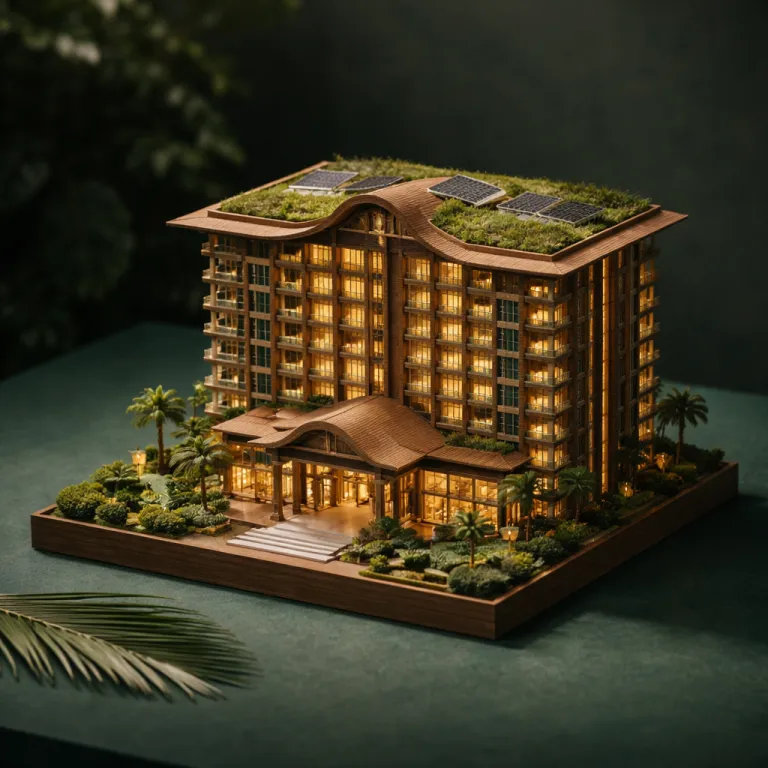
Why sustainable luxury MICE in Thailand starts with carbon math, not mood boards
Luxury planners often talk about sustainable luxury MICE in Thailand, but the real story starts with numbers. The carbon profile of meetings, incentives, conferences and exhibitions in this destination is driven less by scented lobbies and more by air conditioning loads, event catering waste and international attendee flights. When you book a large MICE event in Thailand, every chilled ballroom in Bangkok or in another province quietly adds tonnes of emissions to the tourism ledger.
For any serious MICE sector strategy, you need to map the full journey across tourism, travel and business touchpoints. A three day international conference in a major MICE city such as Bangkok or Chiang Mai often means long haul flights, airport transfers, convention exhibition shuttles and lavish gala dinners that strain sustainable tourism goals. That is why specialists in tourism MICE now use carbon footprint assessments, emissions offsetting strategies and green venue selection as standard management tools rather than optional extras, with typical benchmarks expressed as kilograms of CO2 per attendee and per event day. As a reference point, the Global Destination Sustainability Movement and the Events Industry Council report that large international conferences often range between 150 and 300 kg CO2 per participant for a multi day program, depending on flight distance and venue efficiency.
On the ground, Thailand MICE planners are helped by a dense hotel network and a tourism ecosystem that understands service at scale. Yet scale cuts both ways for the MICE industry, because the best MICE venues are also the hungriest in terms of energy, water and imported food. When you evaluate any Thailand tourism proposal for MICE events, ask for data on energy sourcing, food procurement and waste management before you look at the flower budget, including metrics such as kilowatt hours per square metre of meeting space and litres of water per guest night. Industry benchmarks from the International Tourism Partnership suggest that efficient urban hotels can operate around 150–250 kWh/m²/year and 200–400 litres of water per guest night, figures that give you a baseline when comparing properties.
Government agencies and national tourism bodies have started to frame sustainable luxury MICE in Thailand as a competitive advantage rather than a constraint. The Thailand Convention and Exhibition Bureau, often referred to as TCEB or the bureau TCEB, positions each certified MICE destination as a responsible business platform, not just a glamorous backdrop. In parallel, the Tourism Authority of Thailand, commonly known as TAT, promotes Thailand tourism readiness for sustainable tourism by highlighting provinces where infrastructure, community engagement and environmental safeguards already align, drawing on data from its annual tourism statistics reports and TCEB’s MICE Sustainability Thailand guidelines.
Regional competition sharpens this shift, because destinations such as Sri Lanka are marketing their own sustainable tourism MICE credentials to the same international events buyers. When TTG Asia or other TTG publications profile a new MICE city in Asia, they now benchmark competitive MICE performance not only on room inventory and convention exhibition capacity, but also on long term environmental commitments. For corporate clients, this means that sustainable luxury MICE in Thailand is no longer a niche; it is part of how the destination defends its status on the global stage, with cities increasingly compared on indicators such as certified green venues, public transport coverage and published emissions reduction targets.
One actor translating these policies into practice is Mice Magic Thailand, an event management agency that specialises in sustainable event planning for international business clients. Their team reports a 30 % carbon footprint reduction across recent projects and a 95 % client satisfaction rate, figures that show how sustainability and guest experience can reinforce each other when tracked through audited post event surveys and emissions reports. These numbers are based on internal calculations aligned with the Greenhouse Gas Protocol and the ISO 20121 sustainable events standard, using third party tools such as the myclimate and Atmosfair event calculators for verification. As they explain to hesitant planners, “What is a sustainable luxury MICE event? An eco-friendly, high-end meeting, incentive, conference, or exhibition. How does Mice Magic Thailand ensure sustainability? Through carbon assessments, green venues, and eco-friendly practices. Why choose sustainable MICE events? To reduce environmental impact and enhance brand image.”
Fairmont Bangkok Sukhumvit and the paradox of scale in sustainable luxury MICE
Fairmont Bangkok Sukhumvit enters the Thailand MICE landscape with a bold claim, positioning itself as the first fully integrated luxury MICE hotel in the city. The property sits in a dense urban district where skytrain lines, corporate headquarters and high end malls intersect, which is exactly where business leisure travelers want to be between meetings and late night street food. For sustainable luxury MICE in Thailand, this location cuts commuting emissions while concentrating energy use into a single, highly engineered building.
Large format hotels like this one are structurally different from smaller corporate retreat properties in any province, because their MICE sector revenue depends on filling vast ballrooms and multiple breakout rooms. That scale makes the air conditioning load of a single international conference feel like a small power plant, especially during hot season when Thailand tourism peaks. Yet the same scale allows serious investments in renewable energy solutions, high efficiency chillers and digital building management systems that a smaller MICE destination venue could never finance alone, often targeting specific energy intensity thresholds per occupied room. For context, leading green hotel case studies published by the World Green Building Council show that deep retrofits can cut energy use by 20–40 % compared with conventional properties of similar size.
Fairmont’s operational commitments matter because they set a benchmark for sustainable luxury MICE in Thailand that other Thailand convention properties will be pushed to match. Energy sourcing is the first pillar, with grid electricity increasingly supplemented by on site or contracted renewable capacity that reduces the carbon intensity of every MICE event. Food procurement is the second, where shorter supply chains, seasonal menus and partnerships with local sustainable producers in nearby provinces can cut both emissions and waste without compromising service standards, while also allowing clearer reporting on the percentage of ingredients sourced within Thailand. Hotels that publish these figures in sustainability reports, following frameworks such as the Global Reporting Initiative, make it easier for corporate clients to compare options.
Linen and amenities programs form the third pillar, and this is where guest behaviour intersects with management policy in a very direct way. Opt in linen reuse, bulk amenities and careful housekeeping scheduling can dramatically reduce water and chemical use across hundreds of rooms during peak tourism MICE seasons. Studies cited by the Pacific Asia Travel Association and the Sustainable Hospitality Alliance indicate that well designed linen reuse programs can cut laundry related water consumption by 15–25 % without affecting guest satisfaction. For business travelers extending their stay, these measures turn sustainable luxury MICE in Thailand from an abstract corporate policy into a daily, tactile experience that can be quantified in litres of water saved and reduced single use plastic items per guest.
There is a counterpoint, however, when you compare Fairmont Bangkok Sukhumvit with a smaller corporate retreat property in the Andaman region that focuses on regenerative travel. A resort such as Six Senses Yao Noi, which has been profiled as a reference for Andaman sustainable luxury, shows how a lower per guest footprint can be achieved through fewer rooms, intensive local sourcing and deep community integration, as detailed in this review of sustainable luxury in the Andaman Sea. For small leadership offsites or incentive trips, such destinations can outperform any city MICE hotel on pure environmental metrics, even if they lack the convention exhibition capacity required for large scale international events.
For sustainability officers, the lesson is clear when advising executives on where to host their next Thailand MICE gathering. Use large integrated properties like Fairmont Bangkok Sukhumvit when you genuinely need the full stack of ballrooms, breakout rooms and exhibition bureau style logistics, and then demand transparent emissions reporting. For smaller groups, consider shifting to lower impact coastal or island destinations where the sustainable tourism narrative is backed by hard data on energy, water and waste, including independently verified figures where available. A simple internal comparison table that lists each shortlisted venue’s kg CO2 per delegate, kWh/m² of meeting space and litres of water per guest night can make trade offs visible for decision makers.
How to brief your sustainability team before booking a Thailand MICE venue
Corporate sustainability officers now sit at the same table as procurement and event management teams when Thailand MICE budgets are discussed. Before you sign a contract for sustainable luxury MICE in Thailand, your brief should define carbon targets, reporting expectations and community impact goals as clearly as rooming lists. This is where Thailand tourism readiness for responsible business is tested in real time, not in glossy brochures.
Start with transport, because international flights and local transfers dominate the footprint of most MICE events in this destination. Choosing a MICE city with strong public transport, such as Bangkok with its BTS and MRT lines, can reduce the need for private vans and taxis between hotels, convention centres and offsite dinners. When you evaluate competing destinations, ask each Thailand convention venue to model emissions for your specific attendee mix rather than quoting generic tourism MICE averages, and request results in CO2 per participant so you can compare options. Methodologies published by the Events Industry Council and the ISO 14064 standard provide a transparent basis for these calculations.
Next, interrogate the venue’s energy and water profile, because this is where large integrated hotels can either shine or stumble. Request recent data on energy intensity per occupied room and per square metre of meeting space, and ask whether renewable energy contracts are in place for long term supply. For water, look at consumption per guest night, greywater reuse systems and any collaboration with local government agencies on conservation in the surrounding province, along with evidence that these figures are tracked consistently over time. If possible, ask for the last three years of data so you can see whether performance is improving or plateauing.
Food and beverage is the third major lever, and it is often where sustainable luxury MICE in Thailand can feel most tangible to attendees. Push for menus that prioritise local ingredients, seasonal produce and plant forward options, while still reflecting the culinary richness that draws tourism to this destination. Ask the hotel’s management team how they handle surplus food, whether through partnerships with charities, composting programs or other waste reduction initiatives aligned with sustainable tourism principles, and request approximate percentages for food donation and diversion from landfill. The World Resources Institute’s Food Loss and Waste Protocol offers a useful framework for venues that are serious about tracking these flows.
Certification and labelling can help, but they are not a substitute for detailed questions. Thailand now has its own frameworks for recognising sustainable properties, and the CF Hotels label has recently crossed a significant threshold of certified hotels, which we unpack in this guide to reading sustainability labels when booking. When you assess a potential MICE destination, treat these labels as a starting point for due diligence rather than a final verdict, and ask whether the underlying audits cover MICE specific operations such as large banquets and exhibition halls. Independent schemes such as EarthCheck, Green Key and LEED can provide additional assurance when combined with locally developed labels.
Your brief should also address social impact, because sustainable luxury MICE in Thailand is as much about people as it is about kilowatt hours. Ask how the hotel and its partners engage local communities, from hiring practices and training to sourcing from small businesses in the province. For incentive extensions, consider steering executives toward experiences that support local sustainable businesses, such as eco conscious island stays or cultural programs that respect community boundaries and publish clear guidelines on visitor behaviour. Clear social metrics, such as the percentage of staff hired locally or the share of procurement spent with community enterprises, make these commitments easier to evaluate.
Using your leverage as a business leisure traveler in Thailand’s MICE ecosystem
Individual executives often underestimate their influence within the Thailand MICE ecosystem, especially when corporate travel policies seem fixed. Yet every time you extend a business trip into leisure, you make choices that either reinforce or challenge how sustainable luxury MICE in Thailand evolves. The hotel you select, the experiences you book and the questions you ask at check in all send signals to management.
When you arrive in a MICE city like Bangkok for an international conference, consider how your own movements shape the tourism footprint of the destination. Using public transportation where possible, choosing eco conscious services and supporting local sustainable businesses can reduce the marginal impact of your stay without sacrificing comfort. If your schedule allows, shifting one or two nights to a lower impact coastal property, such as an elegant resort escape on Koh Lipe described in this guide to planning an elegant island stay, can rebalance the intensity of a week spent in air conditioned ballrooms.
Your most powerful tool, however, is the ability to ask informed questions of both your corporate travel department and the venues they contract. Before a major Thailand MICE event, request emissions estimates for the full program and ask whether the chosen MICE destination has provided recent sustainability reports audited by independent bodies. When enough executives treat sustainable luxury MICE in Thailand as a baseline expectation rather than a niche preference, procurement teams start to prioritise competitive MICE bids that integrate sustainability from the outset and disclose performance indicators such as CO2 per delegate. Over time, this shifts demand toward venues that can document real progress rather than relying on generic green marketing.
During the event itself, pay attention to the details that reveal whether sustainability is embedded or merely staged. Look at how waste is handled in meeting rooms, whether water is served in refillable containers, how air conditioning is managed during low occupancy periods and whether staff seem trained in sustainable tourism practices. These observations can feed back into post event evaluations, helping your organisation refine its criteria for future MICE events in Thailand and other destinations such as Sri Lanka that compete for the same international business.
After you return home, close the loop by sharing feedback with both your internal sustainability équipe and the hotel’s management. Highlight where sustainable luxury MICE in Thailand felt authentic and where it fell short, from energy practices to community engagement in the surrounding province. Over time, this kind of precise, experience based feedback helps align Thailand tourism development with the expectations of global travelers who care about both comfort and conscience, and gives sustainability officers concrete examples to reference in future venue negotiations.
Key figures shaping sustainable luxury MICE in Thailand
- Mice Magic Thailand reports a 30 % reduction in carbon footprints across its recent sustainable luxury events, according to its latest annual report, showing how targeted management can cut emissions without sacrificing guest experience when measured in CO2 per attendee. The methodology is based on the Greenhouse Gas Protocol scopes 1–3 and uses recognised event calculators for consistency.
- The same agency records a 95 % client satisfaction rate in post event surveys, indicating that sustainable tourism measures in MICE events can enhance, rather than diminish, perceived service quality when results are independently reviewed. Survey questions are aligned with Net Promoter Score and standard hospitality satisfaction indices.
- Bangkok continues to rank among Asia’s leading MICE cities in industry publications such as TTG Asia, reflecting strong international demand for Thailand MICE events and underlining the importance of integrating sustainability into long term tourism development strategies with clear performance metrics. TCEB’s annual MICE statistics and the ICCA (International Congress and Convention Association) rankings provide additional context on visitor volumes and event types.