Why Chiang Rai’s Golden Triangle rewrites how you travel Thailand
Most people who travel Thailand focus on Bangkok, Phuket, and perhaps Chiang Mai. Yet the Golden Triangle in northern Thailand offers a quieter frontier energy that rewards independent travellers who prefer river mist to rooftop bars and who want their trip to feel genuinely cross border. When you plan a Thailand itinerary with this region in mind, you start to see how the country’s cultural landmarks, tea hills, and Mekong water routes can shape a very different kind of stay.
The Golden Triangle sits where Thailand, Laos, and Myanmar meet, and this geography shapes every aspect of travel. You feel it in the way Thai, Lao, and Shan people share markets, in the border formalities that remind you international journeys always carry some risk, and in the way travel advisories sometimes mention the wider Thailand–Cambodia and Myanmar corridors in the same breath. For luxury travellers used to Bangkok–Chiang Mai shuttles and quick hops to Koh Samui, this region will feel more elemental, more about time and river light than about polished services.
For those planning to explore Thailand with a focus on cultural landmarks, Chiang Rai is a strategic base. You can spend several days on the Thai side exploring temples, tea plantations, and border towns, then cross the Mekong by slow boat for lunch in Laos or a market wander in Myanmar, always checking current international travel regulations and any visa requirements before you go. The best time to appreciate this frontier character is early in the cool season, when the air is clear, the water levels are gentle, and the rainy season has retreated into memory.
Tea plantations above the Mekong: slow mornings in thai highlands
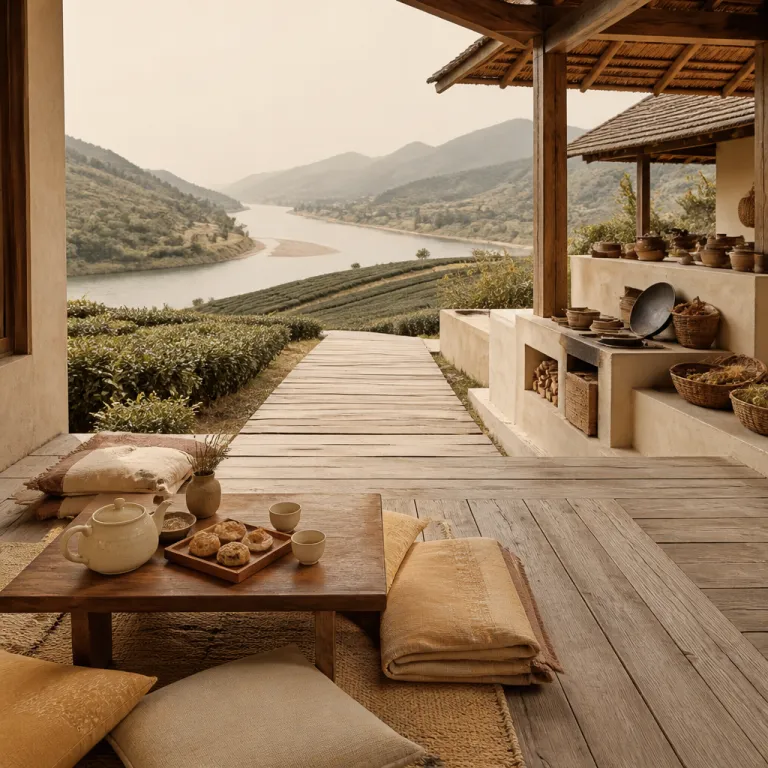
High above the Mekong, the tea country around Chiang Rai shows a softer side of travelling Thailand. At Choui Fong Tea Plantation, rows of emerald bushes curve along the hills, and people drift between tastings and terrace cafés while mist lifts slowly from the valley. This is where a trip to northern Thailand becomes less about ticking off a place and more about letting time stretch over a pot of oolong and a plate of delicate Thai desserts.
Serious tea lovers should plan several days on the Thai side to explore multiple estates. Choui Fong offers polished visitor services and photogenic viewpoints, while Singha Park mixes tea fields with cycling paths, zip lines, and a small farm that works well if you travel with friends or extended family. Further into the highlands, Doi Chaang feels more intimate, and conversations with growers give travellers a grounded sense of how water, soil, and altitude shape both flavour and the local economy of this part of the country.
Luxury properties such as Tatvani, Four Seasons Tented Camp Golden Triangle, and Anantara Golden Triangle Elephant Camp & Resort now weave these plantations into curated Thailand travel experiences. A driver will take you from riverfront villa to hillside tasting room, while guides share travel tips on everything from rainy season road conditions to travel health basics at altitude. To understand how these rituals of tea, wai, and welcome fit into the wider culture of travel in Thailand, it is worth reading a deeper perspective on Thai hospitality beyond the lobby before you go.
Border kitchens and Mekong markets: where three countries meet on a plate
Down by the river, the Golden Triangle’s kitchens tell you more about the region than any museum could. Menus fold together Thai, Lao, and Myanmar influences, and travellers who usually chase Bangkok street food suddenly find themselves obsessed with grilled river fish, herb packed salads, and sticky rice served with smoky dips. When you travel Thailand for food, this is where you realise the best meals often happen in open air shacks with plastic stools and a view of the water.
Night markets in Chiang Rai town and border villages are ideal for people who like to walk, taste, and watch. You might start with a bowl of khao soi, the northern Thai curry noodle soup, then move to Lao style sausages, Myanmar inspired curries, and desserts that rely on coconut, palm sugar, and seasonal fruit, all while keeping an eye on your travel health by choosing stalls with fast turnover and freshly cooked dishes. Sensible travellers avoid ice in drinks if they are unsure about water quality, and they carry travel insurance that covers food related issues, because even the best planned Thailand trip can involve a stomach upset.
Because this is a border region, you will notice how international trade and migration shape both ingredients and stories. Conversations drift from the Cambodia border situation further south to the practicalities of crossing between Thailand, Cambodia, and Laos, and from visa rules to the realities of international travel in a region where river levels and politics both matter. If you are combining Chiang Rai with cultural landmarks such as Ayutthaya, consider the strategy outlined in this guide to planning day trips from a luxury base, then apply the same thinking to your Golden Triangle days.
Temples, art, and cultural landmarks beyond the usual Chiang Mai circuit
Chiang Rai’s art scene has grown into a compelling reason to travel Thailand north, especially for solo travellers who like to move at their own pace. The White Temple, or Wat Rong Khun, looks almost unreal in the morning light, its mirrored mosaics catching the sun while people file silently across the bridge of rebirth. Later in the day, the Black House, or Baan Dam Museum, offers a darker counterpoint, with teak halls filled with animal skins, antlers, and sculptures that speak to a more primal reading of the country’s culture.
Across town, the Blue Temple, Wat Rong Suea Ten, glows with cobalt walls and gold detailing, and it feels more intimate than many Bangkok landmarks. These three sites together make Chiang Rai a strong alternative to Chiang Mai for travellers who want art and architecture without the crowds, and they pair well with day trips to hilltop viewpoints that look across the Mekong into Laos and Myanmar. When you plan your days on the Thai side, allow time to sit quietly in temple courtyards, because the best time to feel the rhythm of local life is often just after the main tour groups leave.
From an international travel perspective, these cultural landmarks also fit neatly into longer Thailand travel routes that might include Bangkok, Sukhothai, and even cross border extensions. Smart planning here includes checking current travel advisories for the wider region, especially if you intend to approach the Cambodia border later in your trip, and ensuring your travel insurance covers both domestic flights and any planned river crossings. For families or mixed age groups, Chiang Rai combines well with other parts of the country, and this guide to luxury hotels in Thailand for families with teenagers can help you balance solo exploration with shared experiences.
Mekong river life and the quiet luxury of tented camps
On the water itself, the Mekong slows everything down, and that is precisely the point of travelling Thailand to this corner of the map. Long tail boats and slower cruisers trace the curves of the river, passing sandbanks, small temples, and fishermen who work the currents with a patience that makes city time feel irrelevant. For many travellers, the best time to visit is when the air is cool and clear, usually outside the peak rainy season, because visibility matters as much as comfort on these long, contemplative rides.
Luxury stays here lean into that river rhythm rather than fight it. Four Seasons Tented Camp Golden Triangle and Anantara Golden Triangle Elephant Camp & Resort both offer all inclusive experiences where your tent or villa opens onto jungle and water, and where guided excursions replace the usual urban services of spas and malls. A newer arrival, Tatvani, focuses on private villas and deep privacy, and together these three properties show how the region has become a reference point for people who want their Thailand travel to feel both indulgent and grounded in nature.
When you book, pay attention to how each property handles activities, safety, and any potential risk. Resort teams are used to international guests and will brief you on river conditions, wildlife etiquette, and travel health basics, including hydration in the hot time of year and how to avoid insect bites near water. As one local overview puts it without embellishment, “What is the Golden Triangle in Chiang Rai? The region where Thailand, Laos, and Myanmar meet. What activities are available at these luxury resorts? Elephant encounters, spa treatments, cultural excursions. Are these resorts suitable for families? Yes, they offer family-friendly activities and accommodations.”
Planning, safety, and timing: practical travel tips for the Golden Triangle
Planning to travel Thailand as a solo explorer in the Golden Triangle means thinking carefully about timing, logistics, and safety. The best time for most travellers is the cool, dry period, when river levels are stable and the air is clear enough for long views across the borders, though some people enjoy the lush landscapes that follow the rainy season. Whatever your preference, build in buffer days in Chiang Rai in case of weather related delays, especially if your international flights connect through Bangkok or Chiang Mai.
On the safety front, the Golden Triangle feels calmer than its history suggests, but you should still read current travel advisories from your home country. Standard travel health precautions apply, including up to date vaccinations, careful sun protection, and attention to water safety, particularly if you swim in rivers or remote pools, and comprehensive travel insurance is non negotiable in a region where medical evacuation can be costly. Sensible travellers avoid unnecessary risk by using licensed boats, vetted drivers, and reputable guides recommended by their hotel or by established operators.
Parents sometimes worry about extreme scenarios such as child abduction, but incidents involving tourists in this part of the country are extremely rare, and basic precautions such as agreeing meeting points and supervising younger travellers in crowded markets are usually sufficient. More common issues involve minor road accidents, food related upsets from adventurous street food, or misunderstandings around visa rules when combining Thailand, Cambodia, or Laos in a single trip, so double check entry requirements before you cross any border. With thoughtful planning, your journey to the Golden Triangle will feel less like a detour and more like the quiet centre of your time in Thailand, a place where time, water, and culture slow you down in the best possible way.
Key figures shaping luxury stays in Chiang Rai’s Golden Triangle
- Three established luxury resorts — Tatvani, Four Seasons Tented Camp Golden Triangle, and Anantara Golden Triangle Elephant Camp & Resort — currently define much of the region’s high end hospitality profile for international guests.
- Two new luxury hotels, InterContinental Chiang Rai Golden Triangle Resort and Kimpton Chiang Rai Golden Triangle, have been announced by IHG Hotels & Resorts in partnership with local developers and are expected to add a significant number of villas and suites to the area over the next few years, signalling strong confidence in the region’s long term appeal for international travellers (as reported in Tourism Authority of Thailand and IHG news releases).
- Both upcoming properties are reported to be targeting internationally recognised green building and wellness standards, reflecting a broader rise in demand for eco friendly and health focused travel services among people who travel Thailand for nature and wellness experiences (Tourism Authority of Thailand newsroom, sustainability section).
- The Golden Triangle’s central viewpoint near Sop Ruak, often described as the point where the Ruak River meets the Mekong, lies a short drive north of Chiang Rai city and sits within a rural river landscape, which helps explain why travellers experience it as both accessible and remote at the same time.
FAQ about luxury travel in Chiang Rai and the Golden Triangle
What is the Golden Triangle in Chiang Rai and why does it matter for travellers ?
The Golden Triangle is the region where Thailand, Laos, and Myanmar meet at the confluence of the Mekong and Ruak rivers, and it matters for travellers because this geography creates a rare mix of cultures, cuisines, and landscapes in a compact area. Luxury resorts here use the river and border setting to offer slow travel experiences, from boat trips to cross cultural market visits. For people planning to travel Thailand beyond the usual Bangkok and beach circuit, it adds a frontier dimension without sacrificing comfort.
How many luxury resorts operate in Chiang Rai’s Golden Triangle ?
At present, three major luxury properties anchor the Golden Triangle: Tatvani, Four Seasons Tented Camp Golden Triangle, and Anantara Golden Triangle Elephant Camp & Resort. These resorts focus on private villas, tented suites, and all inclusive stays that bundle activities, food, and wellness services. Two additional hotels, InterContinental Chiang Rai Golden Triangle Resort and Kimpton Chiang Rai Golden Triangle, are in the pipeline and will expand high end capacity in the coming years.
Are Golden Triangle luxury resorts suitable for families and multi generation trips ?
Yes, the main luxury resorts in the Golden Triangle are designed to welcome both couples and families, and they offer activities such as gentle elephant encounters, cultural excursions, and nature walks that work across age groups. Many travellers combine a stay here with more urban time in Bangkok or Chiang Mai to balance wilderness with city comforts. If you are travelling with teenagers, it can be helpful to choose properties with flexible villa layouts and varied dining options to keep everyone engaged.
What kind of activities can I expect at Golden Triangle luxury resorts ?
Typical activities include guided boat trips on the Mekong, visits to tea plantations such as Choui Fong or Doi Chaang, temple and art tours in Chiang Rai, and wellness experiences ranging from spa treatments to yoga with river views. Some resorts, such as Anantara Golden Triangle Elephant Camp & Resort, also offer structured elephant experiences that prioritise animal welfare and education. All inclusive packages usually bundle several excursions, so it is worth reviewing the details before you book to match the programme to your travel style.
When is the best time to visit the Golden Triangle for river and tea experiences ?
The most comfortable period for river cruises and tea plantation visits is generally the cool, dry season, when temperatures are moderate and skies are clear enough for long views across the borders. Travellers who enjoy lush, green landscapes may prefer the weeks after the rainy season, though they should allow extra time in their itinerary in case of weather related disruptions. Whatever the timing, booking early is advisable because the number of high end tents and villas in this part of northern Thailand remains limited compared with major city hotels.
References
- Tourism Authority of Thailand Newsroom (TAT News) — official updates on new hotel developments and regional tourism data.
- Ministry of Tourism and Sports, Thailand — statistics on international arrivals, regional travel patterns, and tourism policy.
- World Health Organization (WHO) — travel health guidance for Southeast Asia, including vaccination and safety recommendations.